
Criminal Cases in the Humphreys County Courts
Humphreys County General Sessions Court handles misdemeanors, traffic matters, initial appearances, and the preliminary stages of felony cases. Felony prosecutions that continue after indictment or transfer move to Humphreys County Circuit Court. Both trial dockets are routed through the Circuit and General Sessions Clerk. City ordinance citations remain with the municipal court in Waverly, New Johnsonville, or McEwen, so the source of the charge matters before a search begins.
The clerk is the custodian for the trial case file. That office maintains criminal files, dockets, summonses, orders, and judgments. A sheriff booking record may identify an intake charge, but it cannot establish the later plea, dismissal, acquittal, or sentence. Those results belong in the Humphreys County court record. Readers following a case from its arrest stage can compare it with the county's arrest-record process, but the criminal docket remains the sound source for the outcome.
Humphreys Court Files in Room 106
The Humphreys County criminal records counter is at the Humphreys County Courthouse, not the general County Clerk counter. The Tennessee courts clerk directory places the Circuit and General Sessions Clerk in Room 106 at 100 North Court Square, Waverly, TN 37185. The phone is 931-296-2461, and published hours are Monday through Friday, 8:00 a.m. to 4:30 p.m. Call first when an older file may be archived or a certified copy is needed.
The official directory provides a useful visual check on the office and its role. View the Humphreys County clerk listing before contacting the records counter.
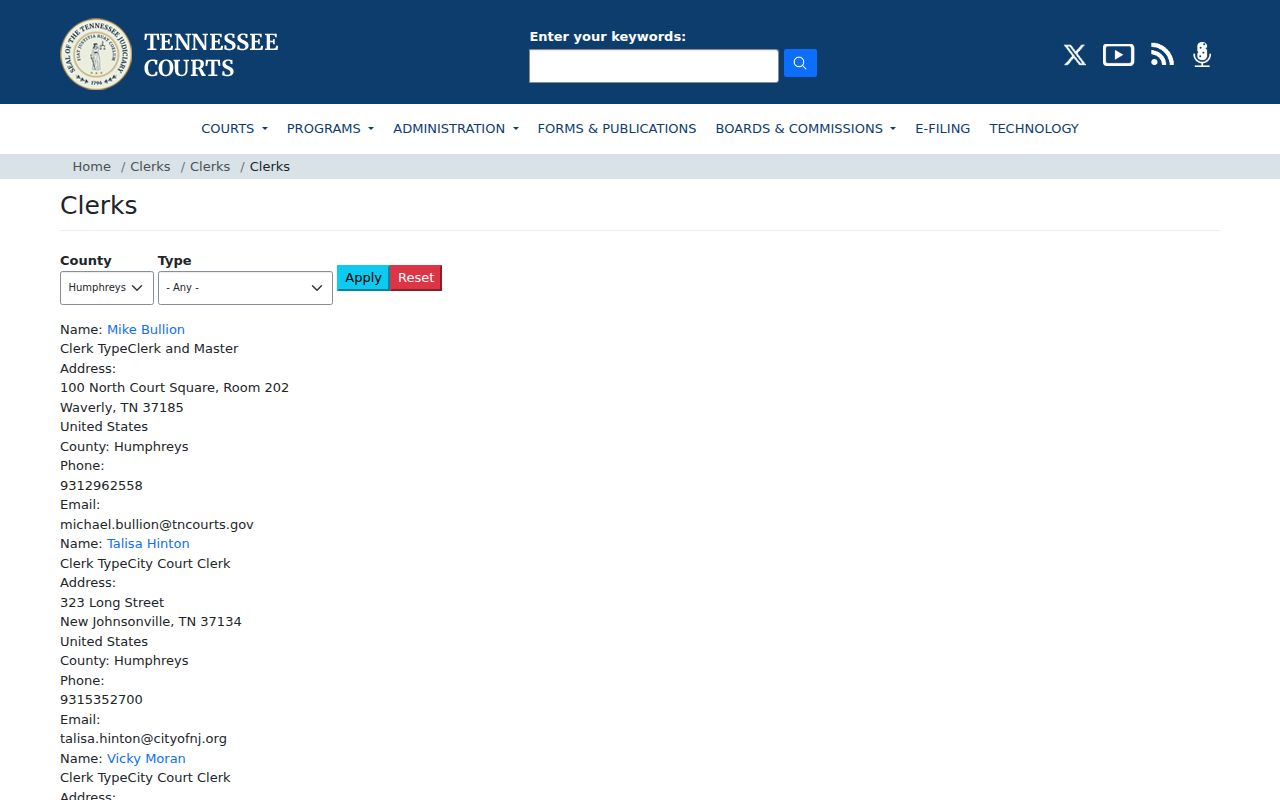
The listing helps separate Room 106 from the County Clerk at the Rawlings Building, which handles other county services rather than criminal dockets.
Circuit and General Sessions Clerk
Humphreys County Courthouse
100 North Court Square, Room 106
Waverly, TN 37185
931-296-2461
Monday through Friday, 8:00 a.m. to 4:30 p.m.
How to Search Case Records
No official public online search for ordinary Humphreys County trial cases was located. The most complete route starts with the clerk by phone, at the counter, or through a copy request. Use the full name, an approximate filing or arrest year, and a docket number when known. Ask which court and division holds the matter. Also ask whether the file is active or archived and what identification, payment, or prepayment the clerk currently requires.
- Identify whether the matter is a city citation, a General Sessions case, or a Circuit case.
- Call Room 106 with the full name, approximate year, and docket number if available.
- Ask for the register of actions, charging instrument, orders, judgment, sentence, and certified disposition as needed.
- Confirm the current inspection, copy, certification, mail, and payment rules because no local fee schedule was found.
- If the case was appealed, move to Tennessee Appellate Courts Public Case History and search its appellate fields.
The appellate system is not a substitute for the Humphreys County trial docket. Its search fields are:
| Field Label | Type | Required | Notes |
|---|---|---|---|
| Appeal case number | Text | One search key | Instructions use the sequence digits |
| Case style | Text | One search key | A partial case style is accepted |
| Party name | Text | One search key | Search first or last name |
| Organization | Text | One search key | For an organization listed as a party |
Humphreys Appeals in C-Track
Tennessee Appellate Courts Public Case History, also called C-Track, covers the Supreme Court, Court of Appeals, and Court of Criminal Appeals. It includes appeals whose record was filed after September 1, 2006. The site says its information is current through the prior business day, and some motions, orders, judgments, and opinions have linked PDFs. An ordinary Humphreys County General Sessions or Circuit case will not appear merely because it exists at trial level.
The statewide instructions show the Humphreys County scope more clearly than a name search alone. See the official appellate search instructions before treating a blank result as proof that no trial case exists.
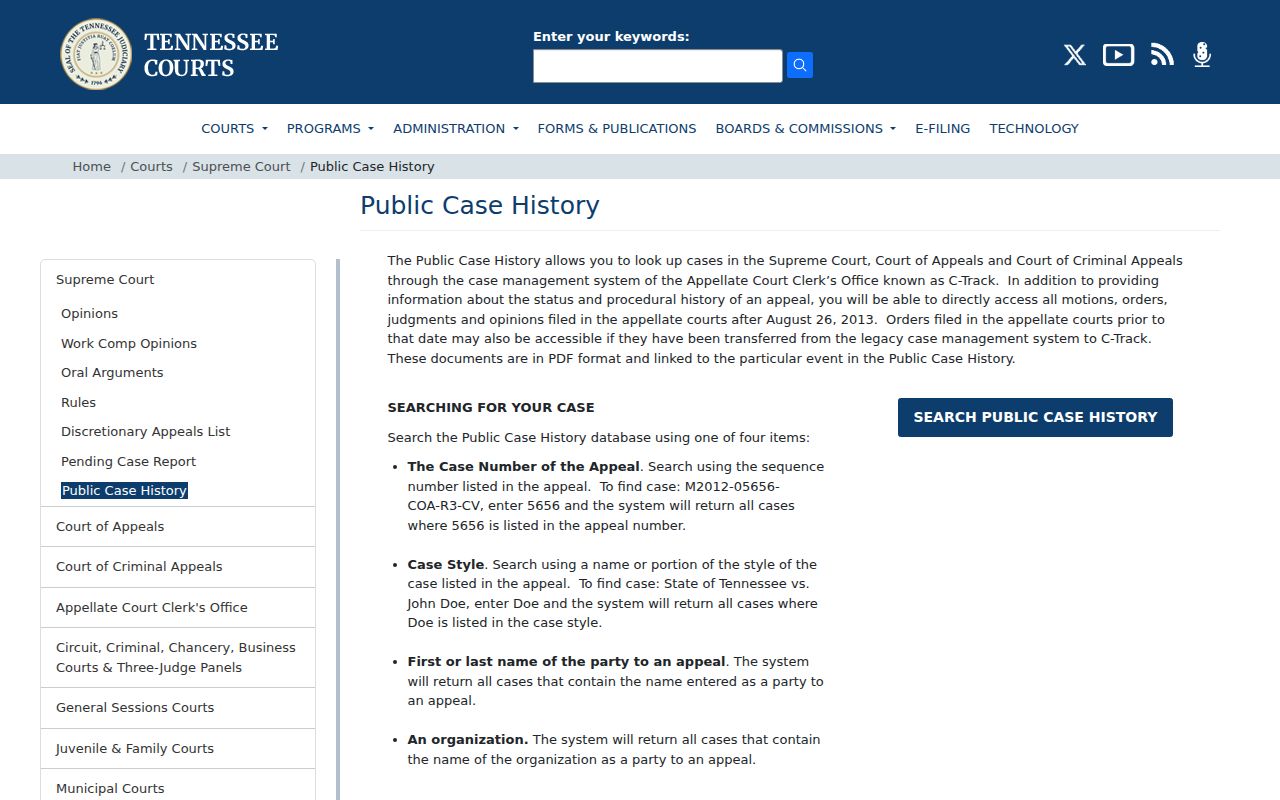
The screen is useful for appeals, but Room 106 remains the first stop for the county's trial record.
What the Case File Shows
A Humphreys County criminal case file follows a prosecution rather than a jail intake. It can document what was filed, when the court acted, how the accused pleaded, which motions and orders shaped the case, and the final result. Request only the parts that answer the question. A register of actions can provide the chronology, while a certified judgment or disposition can provide stronger proof of the result.
| Case Number and Court | Identifies the docket, venue, and division holding the Humphreys County file. |
|---|---|
| Charging Document | Shows the complaint, information, or indictment and the charges as filed. |
| Docket Entries | Lists settings, filings, motions, orders, and other recorded events. |
| Hearing Dates | Shows scheduled or completed appearances recorded by the clerk. |
| Disposition and Judgment | Records dismissal, nolle prosequi, acquittal, conviction, or another court result. |
| Sentence and Conditions | States punishment, probation, costs, restitution, or other public terms ordered. |
Note: A docket entry is a procedural event; obtain the signed judgment or certified disposition when the precise outcome matters.
Reading Humphreys Case Outcomes
Several short terms can change the meaning of a criminal case record. A disposition is the recorded outcome of a charge or case. Nolle prosequi, often shortened to nolle, means the prosecutor formally chose not to continue that charge at that time. A no true bill means the grand jury declined to indict. Dismissal ends a charge without a conviction, while an acquittal is a not-guilty finding after trial.
- Arraignment
- The proceeding where the accused hears the charge and enters a plea.
- Indictment
- A grand jury's formal felony charge, not proof of guilt.
- Plea
- The defendant's formal answer, such as guilty or not guilty.
- Disposition
- The recorded result for a charge or case.
- Sentence
- The punishment and conditions ordered after a conviction.
These terms also affect expungement questions. Some non-conviction results may qualify at no cost, but removal does not happen merely because the docket says dismissed. The originating Humphreys County court must process the qualifying order.
Stages of a Criminal Case
A Humphreys County state-law felony often begins in General Sessions Court, then proceeds to grand-jury consideration and Circuit Court if it continues. Misdemeanors can be resolved in General Sessions. Tennessee Rule of Criminal Procedure 5 provides a preliminary-hearing benchmark of 14 days after initial appearance for a person held in custody and 30 days for a person released, unless the hearing is waived or lawfully changed. Those are rule benchmarks, not promises for a particular Humphreys County file.
Case flow: Charges Filed › Arraignment › Pretrial › Plea or Trial › Disposition › Sentencing
The Humphreys docket records the steps that actually occurred. It may show an initial appearance, bond order, preliminary hearing, indictment, Circuit arraignment, motions, plea, trial, judgment, sentence, and appeal notice. Dates can shift. Confirm the next setting with the clerk instead of relying on an old copy.
Humphreys Criminal Terms Rotate
Humphreys County is part of Tennessee's five-county 23rd Judicial District. Published local rules rotate criminal terms among divisions: Division III in February and August, Division I in April and October, and Division II in June and December. The calendar assigns days for docket call and arraignment, motions, pleas, and probation or community-corrections violations. A local-rule calendar can be superseded, so it helps explain docket structure but does not replace a current clerk confirmation.
The Humphreys County prosecutor's local office is also on Court Square. The 23rd Judicial District Attorney's Waverly office is in Suite 206 at the courthouse and covers Humphreys County Circuit Court, Grand Jury, General Sessions, juvenile work, and specified investigative teams.
The office page shows how closely the prosecution channel sits beside the clerk. View the official Waverly criminal office profile.
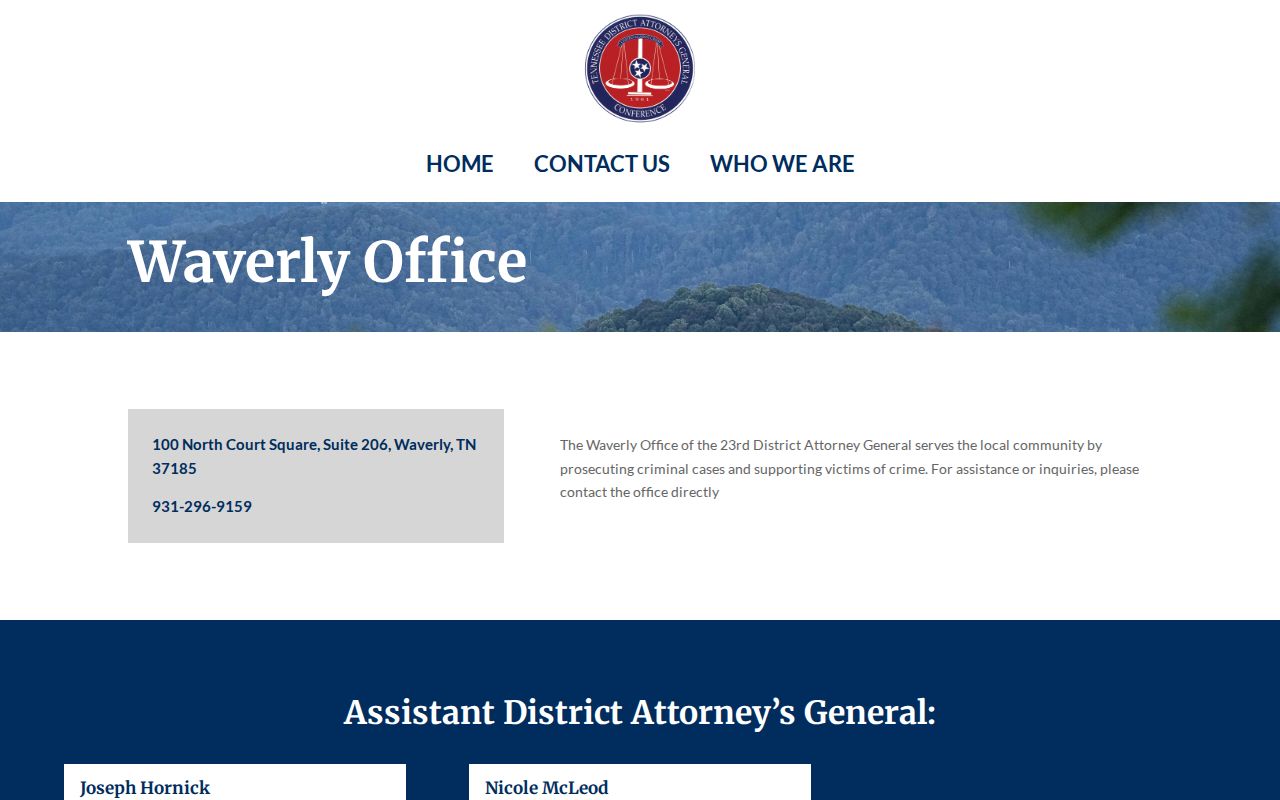
Suite 206 is a prosecution office, while Room 106 is the public starting point for the docket and court copies.
Humphreys Appellate Record Fields
An official non-identifying appellate example confirms the structure of a C-Track detail page. It may show appeal style and number, an intermediate case number, trial court, trial judge, trial docket number, parties and roles, filing and disposition milestones, briefing milestones, document history, and record information. Linked PDFs appear where available. Trial-level bond, fine, arrest, or charge details are not guaranteed as fixed fields.
Open the official non-identifying appellate display example to see those labels in context.
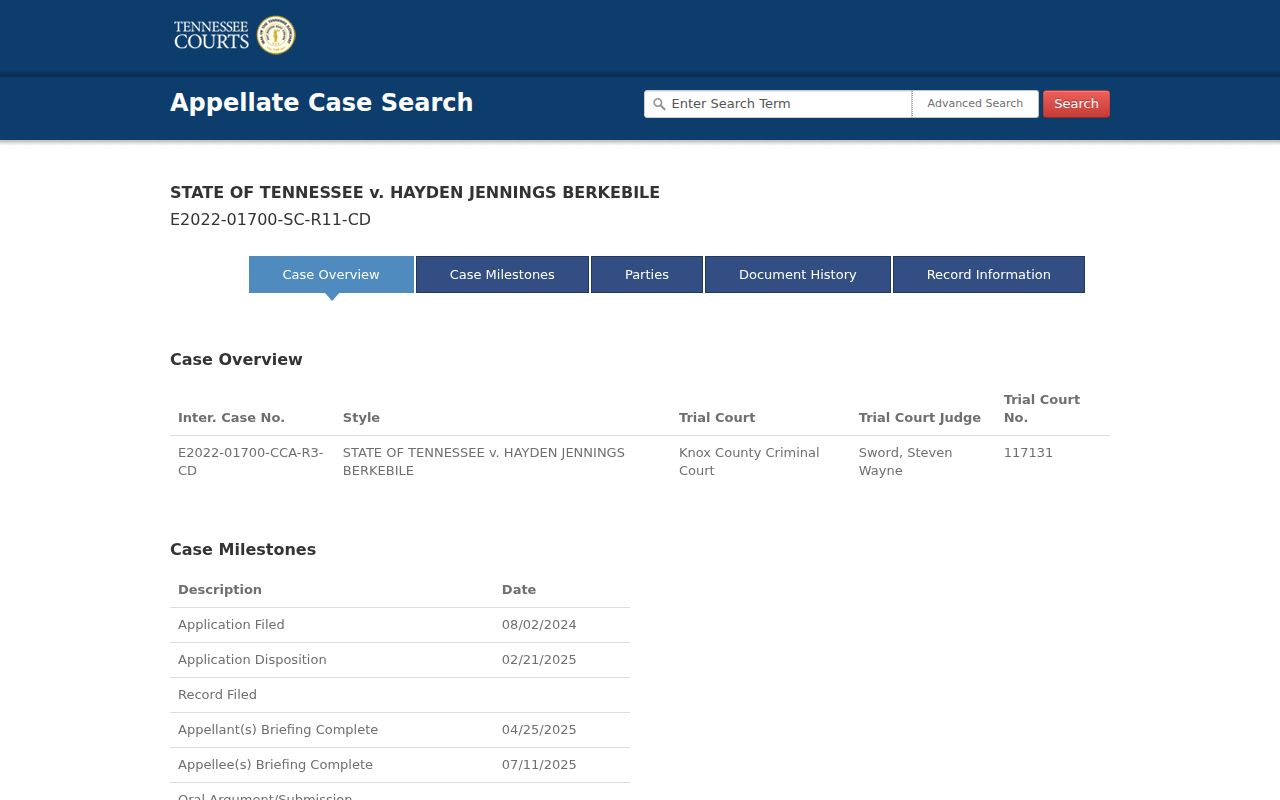
For Humphreys County readers, the example demonstrates appellate layout only; it does not replace a Humphreys County trial file or identify a local subject.
Order Humphreys Certified Dispositions
When a Humphreys County appeal view or phone answer is not enough, ask the Humphreys County clerk for the exact document needed. A certified disposition can confirm the result. A charging instrument identifies what was filed. A judgment states the court's ruling, and the sentence records its terms. Tell the clerk whether inspection, a plain copy, or certification is required, and ask for a quote before ordering because no official local copy or certified-copy fee schedule was located.
Provide a return address and ask whether mail, in-person pickup, or another current delivery path is available. If the record appears to have been expunged, keep any certified expungement order already received. The Humphreys County public docket may no longer show material that a valid order directed agencies to remove.
Access & Restrictions
The Tennessee Supreme Court Rule 34 framework governs public access to court records while recognizing records made confidential by law or rule. The Tennessee Public Records Act also favors access to government records, but neither authority makes every part of every file public. Juvenile matters, protected victim information, personal identifiers, and other confidential content can be withheld or redacted.
If the clerk cannot release a requested item, ask which authority controls and whether a public portion can be separated. A missing online result can also mean the search was made in the wrong system, the file is archived, the case is trial-level rather than appellate, or an expungement changed access. Start with the Humphreys County custodian instead of assuming the record never existed.
Public access has limits: Rule 34 and the Tennessee Public Records Act support access, but record-specific confidentiality and valid expungement orders still control.